A morning routine for 2027 is the most pinned plan of the year — and the most abandoned by the second week of January. Not because mornings are hard, but because the routines people copy are built for someone else's life: a 5am wake-up, a cold shower, a workout, a journal, a green smoothie and an hour of reading, all before work. It looks beautiful on a board. It lasts four days in a real house.
This guide builds the routine the other way round. Start with the smallest version that still changes the day, then grow it only when the small one is automatic. You will find three ready-made versions — 5 minutes, 30 minutes and 60 minutes — morning routine ideas for every goal, the "that girl" routine decoded honestly, and the books and journals that make the whole thing easier to keep.
A quick note on honesty: this page contains affiliate links. If you buy through them, I may earn a small commission at no extra cost to you. The full policy is in the affiliate disclosure.
Your morning routine for 2027 needs five parts, in this order: water and light (a glass of water, open the curtains), move for five minutes (stretch, walk, dance — anything), write one page (gratitude, one feeling, one task), look at your board (ten seconds at your vision board), and plan one thing (the single task that would make today a win). Five minutes on a busy day, thirty on a normal one. That is the whole routine.
Why your morning routine for 2027 should be small, not heroic
Every January the same story repeats. Someone saves a routine with fourteen steps, wakes at 5am on the 1st, feels heroic, and by the 9th the alarm is snoozed, the journal is blank and the whole plan feels like another failed resolution. The problem was never willpower. The problem was the size.
Habit research keeps saying the same thing in different words: a behaviour survives when it is easy, obvious and rewarding. Phillippa Lally's well-known study at University College London found new habits take anywhere from 18 to 254 days to become automatic, averaging 66 — and the habits that survived were the small ones, repeated in the same context, not the heroic ones attempted once a week. Your morning routine for 2027 is not a test of discipline. It is a design problem, and the design that wins is the one your tired self can still do.
So here is the rule for this guide: build the routine for your worst morning, not your best one. The version that works on the day you slept badly, the kids are up early and the weather is grey — that is your real routine. Everything else is a bonus you add on good days.
The 5-part morning routine for 2027
Every version in this guide — 5 minutes, 30 minutes or 60 — is built from the same five parts. Learn the parts once, then stretch or shrink them to fit the morning you actually have.
Part 1: Water and light (2 minutes)
Before the phone, before the news, before anyone needs you: a glass of water and some daylight. Your body has gone seven or eight hours without water, and light is the fastest signal to your brain that the day has started. Open the curtains, step to a window, or — if you can — stand outside for sixty seconds. Coffee comes after water, not instead of it.
Part 2: Move for five minutes
Not a workout. Movement. Stretch in your pyjamas, walk around the block, dance to one song, do ten slow squats while the kettle boils. Five minutes of movement changes the whole morning because it breaks the stillness of sleep. On good days this grows into a walk or a workout; on tired days it stays five minutes, and five minutes still counts.
Part 3: Write one page
One page, three short lines: one thing you are grateful for, one sentence about how you want today to feel, and your one most important task. That is the whole page. Morning journaling works because it puts your intention in your own handwriting before the world hands you its intentions. If you love writing, the page grows on its own. If you do not, three lines is enough — and three lines kept daily beats ten pages written once.
Part 4: Look at your board (10 seconds)
Stand in front of your vision board for ten seconds. Not to study it — just to see it. The board is the picture of the life your routine is building, and ten seconds of looking at it connects the small morning to the big year. If you have not built your board yet, my step-by-step vision board guide starts with goals first and images second. If your board lives on your phone, my digital vision board guide turns your lock screen into the same ten-second reminder.
Part 5: Plan one thing
Choose the single task that would make today a win — one thing, named before the day starts. Not a to-do list of twelve items. One thing. Write it under your journal page, say it out loud, or put it on a sticky note where you will see it. Everything else today is extra. This is the part that turns a nice morning into a productive day, and it takes less than a minute.

Three ready-made routines: 5, 30 and 60 minutes
Pick the length that fits your life right now. You can move between them — a 5-minute day is not a failed day, it is the routine doing its job.
The 5-minute morning routine (for busy mornings)
- Minute 0–1: Glass of water by the bed, curtains open.
- Minute 1–3: Stretch or walk to the kitchen and back — movement, not exercise.
- Minute 3–5: Three lines in your journal: grateful for one thing, today should feel like…, one task that matters.
That is it. No board stare, no planning session — the one task is already on the page. Five minutes is the routine's minimum version, and the minimum version is the one that keeps the streak alive through school runs, early shifts and bad nights.
The 30-minute morning routine (the sweet spot)
- Minutes 0–5: Water, light, make the bed. (A made bed is the first finished task of the day — small, visible, done.)
- Minutes 5–15: Move properly — a walk, a short stretch routine, or a ten-minute workout you actually enjoy.
- Minutes 15–25: Journal one page: gratitude, feelings, the day's one task — plus, if you like, your 369 lines. The 369 manifestation method fits neatly here: three lines in the morning is the first session of the day.
- Minutes 25–30: Look at your board, check your planner, and start the day knowing the one thing that matters.
Thirty minutes is the version most people keep longest, because it feels like a real routine without eating the morning. If you only try one version, try this one for two weeks before deciding it is too long or too short.
The 60-minute morning routine (slow mornings)
- Minutes 0–10: Water, light, a slow breakfast — no phone at the table.
- Minutes 10–30: A proper walk or workout, then a shower and getting dressed properly, even on a home day.
- Minutes 30–50: Journal, read ten pages, and do the 369 morning lines if that is your practice.
- Minutes 50–60: Plan the day in your planner, glance at your board, and choose the one task — then begin it before the hour ends.
Sixty minutes is a weekend routine for most people, or a weekday routine for early risers. It is lovely — and it is the first version to break when life gets busy. Keep the 30-minute version as your default, and treat the 60-minute morning as a gift, not a standard.
Start with the board, not the shopping
The free 2027 Vision Board Starter Pack gives you the life-areas check, the goal worksheet and two printable layouts — so the morning you are building has a picture to wake up to, not just a list to work through.
Get the Free Starter Pack →Morning routine ideas by goal
The five parts stay the same; the details change with the goal. Steal the set that matches the year you are building.
- For money goals: check one number each morning — your balance, yesterday's spending, or the savings total. One number, thirty seconds, no judgement. Then write the one money action for today: one application, one listing, one expense to skip. The 2027 quarterly plan gives each quarter one money focus, so the morning action always has a home.
- For health and energy: water before coffee, daylight within the first hour, and movement before sitting down. A ten-minute walk counts more than a gym membership you never use.
- For calm: three slow breaths before the phone, one page of writing, and no news before breakfast. The calmest mornings are the ones with the fewest inputs.
- For a glow-up: skincare as a ritual, not a chore — three steps, done slowly — plus getting dressed properly even on a home day, and one affirmation from your board read out loud. My self-love vision board guide has 30 affirmations that fit this slot, and the 60 affirmations list covers every area of the year.
- For confidence: one brave thing before 9am. Send the email, make the call, post the thing. Confidence is built in the morning, before the day has a chance to talk you out of it.
The "that girl" morning routine — what to keep, what to skip
You have seen her: up at 5am, lemon water, pilates, journaling, a perfect breakfast, all filmed in golden light. The "that girl" morning routine is the most saved morning routine on Pinterest, and it is worth decoding honestly — because some of it is genuinely useful and some of it is set dressing.
Keep: waking at the same time every day (consistency matters more than the hour), making the bed, drinking water first, journaling, and planning the day before opening social media. These five are the backbone of every routine that actually works, filmed or not.
Skip: the 5am alarm if your life starts at 7, the expensive smoothie ingredients, the outfit change for the camera, and the idea that a good morning must look beautiful. A morning routine for 2027 that only works when the light is golden is not a routine — it is a photo shoot. Yours needs to work in the dark, in winter, on a Tuesday, with yesterday's hair.
The honest version of "that girl" is this: a woman who decided the first hour is hers, and keeps that promise six days out of seven. Everything else is optional.
7 morning routine mistakes
- Copying a 5am routine when you are not a morning person. The hour matters far less than the first hour being yours. A routine at 7:15 kept six days a week beats a 5am routine that collapses by Wednesday.
- Building a 12-step routine on day one. Start with the 5-minute version. Add one part at a time, only when the current version is automatic.
- Checking your phone before water. The phone hands you everyone else's morning before you have had your own. Water first, light second, phone third.
- Skipping the night before. A morning routine starts the night before: clothes out, journal and pen by the bed, water glass filled, phone charging across the room. Ten minutes at night saves thirty minutes of decisions in the morning.
- Treating one missed morning as a failed routine. A missed day is a missed day, not a broken identity. The routine resumes tomorrow — that is the whole recovery plan.
- Buying the perfect journal instead of starting. A plain notebook is enough to begin tonight. Do not let choosing the "right" journal become a way of delaying the practice — though if a guided journal helps you keep the streak, it is money well spent. The picks below are the ones readers actually finish.
- Measuring the routine by how it feels, not by what it does. Mornings will feel ordinary most days. The test is not the feeling — it is whether the one task gets done more often than it did last month.

Your morning routine checklist for 2027
Save this list, or copy it into your planner. Tick what you did — the streak is the reward, not the perfection.
- ☐ Water before coffee
- ☐ Daylight within the first hour
- ☐ Bed made
- ☐ Five minutes of movement
- ☐ One page: gratitude, feeling, one task
- ☐ Ten seconds at the vision board
- ☐ Phone stays off until the page is done
- ☐ One task chosen before the day starts
- ☐ Clothes, journal and water ready the night before
Nine ticks is a perfect morning. Five ticks is a good one. Three ticks on a hard day is still a routine — and a routine kept on a hard day is the one that survives January.
The books and journals that make mornings easier
You can build the whole routine with a glass, a pen and a plain notebook. But the right book or journal removes every excuse — and for a habit you are building in December to carry into January, a little structure is worth it. Prices move around, so each pick links to its live Amazon page — check today's price there.
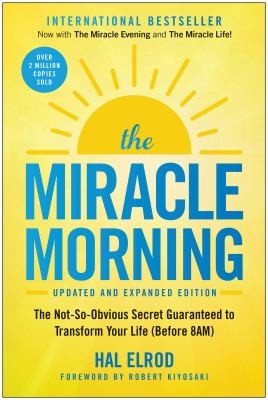
Best for the whole system: The Miracle Morning by Hal Elrod
The book that started the modern morning-routine movement: six practices — silence, affirmations, visualisation, exercise, reading and scribing — in one hour before 8am. Take the framework, not the hour: Elrod's six parts map neatly onto the five parts in this guide, and the book is the best explanation of why mornings set the day. Updated and expanded edition, usually around $13 in paperback.
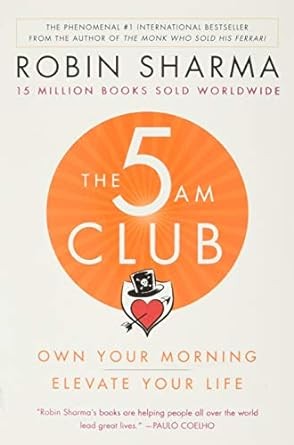
Best for early risers: The 5 AM Club by Robin Sharma
Sharma's famous 20/20/20 formula — twenty minutes of movement, twenty of reflection, twenty of learning — inside a story about two strangers and an eccentric mentor. Best if you genuinely want the early hour and need a book to sell you on it. Take the formula; leave the 5am if your life starts later.
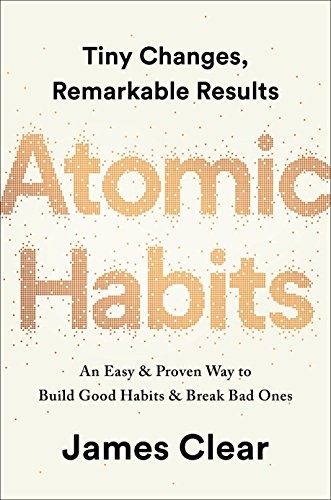
Best for making it stick: Atomic Habits by James Clear
The most useful habit book you can buy, and the one this guide leans on most: habit stacking (attach the new habit to one you already have), the two-minute rule (scale the habit down until it is too small to skip), and environment over motivation (put the journal where you will trip over it). If your routine keeps collapsing, read this before buying anything else. Hardcover usually around $18.
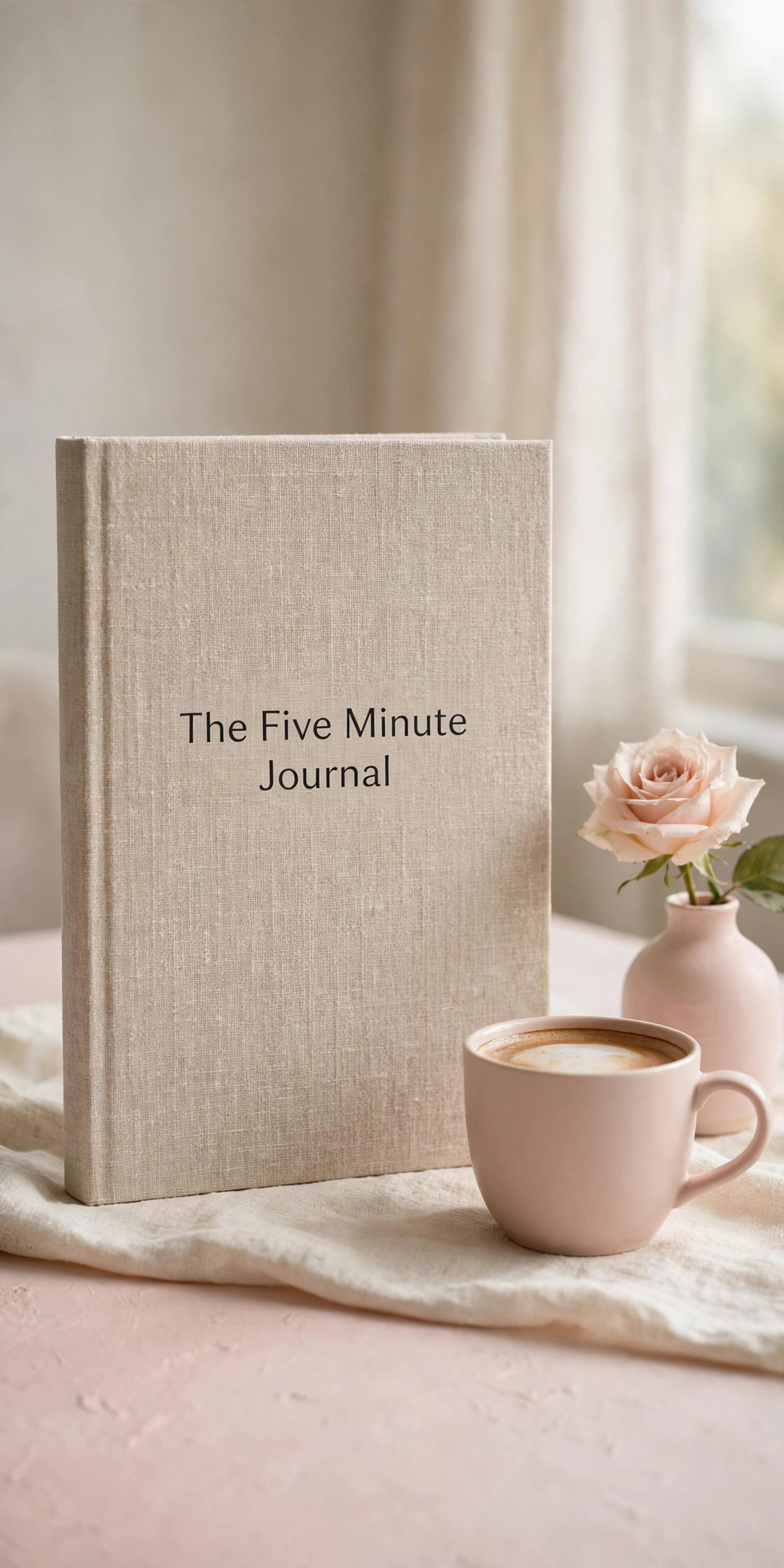
Best 5-minute journal: The Five Minute Journal by Intelligent Change
The original guided gratitude journal: morning prompts (three things you are grateful for, what would make today great, a daily affirmation) and a short evening review, undated so a missed day never ruins the book. The morning page takes five minutes — exactly the page this guide's 5-minute routine is built around.
From this blog's own shelf
Two of mine belong here. The 2027 Reset Planner holds the other half of the system: monthly calendars, vision-board pages, habit and money trackers and quarterly resets, so the one task you choose each morning has a place to live and a week to land in (140 pages, paperback, $19.99). And the 365 Journaling Prompts book gives you one gentle prompt for every day of 2027 — the perfect morning page to sit beside your three lines, and the habit that keeps journaling alive after the novelty wears off (382 pages, paperback, $19.99). Both live permanently on the Shop page.
Two more to watch: my own 369 Manifestation Journal for Women — 90 days of scripting, built exactly around the morning writing in this guide — arrives on Amazon on 1 December 2026, and the Glow Up & Self-Love Edition clip art book arrives in late December 2026. Both will be linked here the moment they are live.
Morning routine for 2027 FAQ
What is a good morning routine for 2027?
A small one you can keep on a tired day: water and light first, five minutes of movement, one page of writing, a look at your vision board, and one clear plan for the day. Five minutes done daily beats a one-hour routine done twice.
How long should a morning routine be?
As long as you can keep. A 5-minute version works for busy mornings, 30 minutes is the sweet spot for most people, and 60 minutes suits slow weekend mornings. Pick the length that survives your worst week, not your best one.
Do I have to wake up at 5am for a morning routine to work?
No. The hour matters far less than the first hour being yours. A routine that starts at 7:15 and is kept six days a week beats a 5am routine that collapses by Wednesday. Wake at a time you can keep, then protect the first hour.
What should I write in my journal in the morning?
Three short things: one line of gratitude, one sentence about how you want today to feel, and your one most important task. That is enough — the journaling habit survives when the page is small.
When should I start my 2027 morning routine?
Now, in December — not on 1 January. Start with the 5-minute version this week, and by New Year the routine is already automatic. January is for living the routine, not for building it from nothing while the rest of the year resets around you.
Pin this for later: save this morning routine checklist to your 2027 planning board on Pinterest, and follow @hervision2027 for a fresh board idea every week.
A morning routine for 2027 does not need to be impressive. It needs to be yours, small enough to survive a bad day, and repeated until it is simply what mornings are. Start tonight: put the glass by the bed, lay out the journal, and let tomorrow be the first five-minute morning of the year you actually keep.
Get the free 2027 Vision Board Starter Pack
The 3-step system, two layouts, goal worksheet with quarterly milestones, and a 7-day starter action plan — the companion to every guide on this blog, free to download.
Download It Free →Morning routines compared
The same five parts, in three sizes — plus the two routines people ask about most. Pick by the morning you actually have, not the one you wish you had:
| Routine | Time | What it includes | Best for |
|---|---|---|---|
| 5-minute routine | 5 minutes | Water, light, stretch, three journal lines | Busy mornings, keeping the streak |
| 30-minute routine | 30 minutes | Bed made, movement, one journal page, board + planner | Most people, most days |
| 60-minute routine | 60 minutes | Slow breakfast, full workout, reading, full plan | Weekends and slow mornings |
| "That girl" routine | 60–90 minutes | Early wake-up, pilates, journaling, styled breakfast | Inspiration — keep the backbone, skip the styling |
| 369 morning lines | 3 minutes | Write your intention 3 times after waking | Pairing with the 369 method round |