For years, I started January the same way: a long list of goals, a fresh notebook, and a quiet confidence that this year would be different. By March, the notebook was in a drawer, the list was forgotten, and I was busy with whatever was loudest that week. The problem was never effort. I worked hard every one of those years. The problem was that I had never answered the question underneath the list: what is this year actually for?
I found the answer in an unlikely place — on my wall. A friend had suggested I try a vision board, and I had dismissed it as decoration. But I was out of better ideas, so I cut nine pictures from old magazines, pinned them to a board, and hung it where I would see it every morning. It looked simple. It changed the way I made decisions, because it forced me to answer that one question first — before the goals, before the plans, before the year filled up with other people's priorities.
This article is the whole method, exactly as I use it now: why a list of thirty goals quietly fails, how to choose nine pictures that tell the truth, how a visible goal survives your worst weeks, and how the board becomes a filter that makes saying no feel less like guilt and more like loyalty to something you chose.
A quick note on honesty: this page contains affiliate links. If you buy through them, I may earn a small commission at no extra cost to you. The full policy is in the affiliate disclosure.
Before you set goals, answer one question: what is this year actually for? Choose three directions — one for your health, one for your work or money, one for the people around you — and pick nine pictures, three for each direction. Give every direction one smallest action small enough to survive your worst week. Hang the board where your morning happens, and run every new request through one test: does this serve something on the board? Review it all every twelve weeks. That is the whole system.
A list collects wishes; a board demands a choice
A list of thirty goals feels productive. It is also a way of avoiding a decision. When everything is on the list, nothing is a priority, and a year can pass while you work hard on things that never mattered to you. The list never asks you to rank anything. It lets a career goal, a health goal, a borrowed goal and a goal you added because it sounded impressive sit side by side as equals — and then life does the ranking for you, by urgency, by whoever shouted loudest, by whatever was easiest that week.
There is also simple arithmetic working against the long list. Your free hours in a week are fixed, and they are fewer than you think. Spread across thirty goals, each goal gets minutes — never enough to build momentum, always enough to feel guilty about. Spread across three directions, the same hours become real progress you can see. The goals that died in my drawer years were not bad goals. They were unranked ones.
The board does not allow that evasion. Nine pictures fit on a board; thirty do not. Choosing the nine means choosing what the year is for — and, harder still, admitting what it is not for. That choosing is the purpose work. It is not a planning exercise; it is an honest conversation with yourself. Which of these would you still want if nobody ever knew you achieved it? Which one would you trade an easy evening for, week after week? The pictures that survive those questions are not the impressive ones. They are the true ones. A small goal you genuinely want will carry you further than a grand goal you are performing for an audience — a lesson I learned the slow way, and wrote about in how I stopped collecting goals and started finishing them.

How to choose your nine pictures: the step-by-step
You do not need craft supplies or artistic skill for this. You need one honest hour, a pen, and the willingness to cross things out. Here is the exact order I use — the order matters, because each step makes the next one easier.
Step 1: Write the long list first
Yes — start with the list. Brain-dump every goal, wish and "I should" onto one page, twenty or thirty of them, without judging any of it. The long list is not the problem; stopping at the long list is. This page is your raw material, and writing it all down gets the noise out of your head and onto paper, where you can look at it honestly.
Step 2: Sort the list into three directions
Draw three columns: health, work or money, and people. Sort every goal into one of them. Most lists turn out to be wildly unbalanced — twenty work goals, one health goal, nothing for the people you love. That imbalance is information. A year is lived in all three areas whether you plan them or not; the only question is whether the neglected two get your attention on purpose or your regret later.
Step 3: Run the two honesty tests
Take each column and ask two questions of every goal in it. First: would I still want this if nobody ever knew? Borrowed goals — the marathon because a friend ran one, the side business because everyone online seems to have one — fail this test, and they are always the first to die. Second: would I trade an easy evening for this, week after week? A direction is paid for in evenings, not in January enthusiasm. Cross out everything that fails either test. What remains is shorter, quieter, and much more likely to be true.
Step 4: Choose nine pictures, three per direction
Now find a picture for each surviving direction — three pictures per direction, nine in total. The picture should show the life, not the trophy: not the medal, but the morning run; not the promotion letter, but the calm desk and the work you are proud of. Pictures of the life get looked at daily without pressure. Pictures of trophies just remind you of a finish line. If you are building a physical board, my step-by-step vision board guide walks through the making; if your board will live on your phone, the digital vision board guide does the same job on a lock screen.
Step 5: Give each direction one smallest action
A goal without a first step is a wish, so under each direction write one action small enough to survive your worst week: ten minutes, one page, one message, one application. Not the full programme — the smallest version that still counts as moving. You will see why this matters in the bad-week section below; it is the step most people skip and the one that decides whether the board is still alive in March.
Step 6: Hang it where your morning happens
Placement is not decoration, it is the mechanism. The board works because you see it daily without deciding to — by the bed, opposite the bathroom mirror, above the desk where the day starts. A board in a drawer is just a prettier list. Ten seconds of looking, every morning, is the entire daily practice.
Start with the worksheet, not the shopping
The free 2027 Vision Board Starter Pack gives you the life-areas check, the goal worksheet and two printable layouts — the same three-directions sorting from Step 2 above, on one page, ready to fill in tonight.
Get the Free Starter Pack →Purpose is a direction, not a destination
People often wait for purpose to arrive as a revelation — a single calling, fully formed, that settles the question forever. In my experience, purpose is quieter than that. It is a direction, not a destination: a sense that this year is about health, or about providing, or about learning, or about repairing a relationship. You may never get a louder answer than that, and you do not need one. A direction you can state in one sentence is enough to steer a year.
This is also why the question is asked per year, not per lifetime. "What is my life for?" is too big to answer on a Tuesday. "What is this year for?" fits in an honest hour. And the answer is allowed to change: the year of providing becomes the year of health becomes the year of building. Each year's direction is chosen, lived, and then reviewed — which is a far kinder system than waiting for a single calling to announce itself. If you like compressing the direction even further, a word of the year does the same job in one word; the board is simply the word made visible.
The board makes the direction visible, and visibility is what keeps it alive when motivation fades. Motivation is weather; it changes by the day. A picture on a wall is climate — it is simply there, every morning, quietly restating what the year is for, on the days you feel inspired and on the days you feel nothing at all.
How a visible goal survives a bad week
That visibility matters most on ordinary weeks. The week you are ill, travelling, or working late is the week most goals die — because the planned action was built for a perfect week that never arrives. The gym programme needs an hour you do not have. The writing goal needs a quiet evening that does not come. By Friday the plan is broken, and a broken plan quietly becomes an abandoned one.
A visible goal survives those weeks, because the board re-offers the direction every morning and the smallest action gives you a way to answer it. You see the picture, you do the smallest version of the action — ten minutes instead of an hour, one page instead of a chapter, one message instead of the long visit — and the direction holds. The streak that matters is not the perfect week. It is the unbroken thread of small actions running through imperfect ones.
So build the bad-week version of each direction in advance, while you are calm: health becomes a ten-minute walk and a glass of water before coffee. Work becomes one page, one application, one honest hour. People becomes one message sent instead of the visit you cannot make. Write these small versions under the pictures themselves. On the bad week, you will not have the energy to invent them — but you will have just enough to follow them. Purpose is not maintained by heroic weeks. It is maintained by small actions repeated on bad weeks.

The board as a filter for saying no
The most useful thing the board did for me had nothing to do with dreaming. It gave me a way to say no. Every new request, every opportunity, every invitation had to pass one test: does this serve something on the board? If it did not, the answer was no — not because I was selfish, but because my time already belonged to something I had chosen.
Before the board, I said yes to everything and finished nothing. My calendar filled with other people's urgencies, and the things that mattered to me waited for a free week that never came. After the board, my yeses became fewer and better. The projects I accepted got my full attention instead of my leftover hours. And a surprising thing happened: people started asking me for the things that actually fit. A clear no teaches people what your yes means.
The filter also changes how a no feels. Without it, every refusal is a fresh act of willpower, argued out in your head against guilt. With it, the decision was already made — in January, calmly, by you. You are not rejecting a person; you are keeping an appointment with a direction. If it helps, borrow the words I use: "I would love to, but my time this quarter is already promised to a few things I chose at the start of the year." Or: "That sounds worthwhile — it is just not one of the three things this year is for, so I have to pass." Or, for the request that is genuinely good but not yours: "I am not the right person for this one, but I hope you find them." Short, warm, final. A yes that costs you a direction is not kindness; it is a debt your future self pays.
Three honest questions for your own board
If you want to try this, you do not need craft supplies or artistic skill. You need nine pictures and three honest questions. These are the questions from Step 3, slowed down — sit with each one before you pin anything.
First: what would genuinely change my life if it moved forward this year? Not in five years — this year. Pick one thing for your health, one for your work or money, and one for the people around you. Three directions are enough; nine pictures across three directions fill a board without crowding it. If a fourth direction keeps insisting, it can wait for the next quarterly review — a board that holds everything holds nothing.
Second: would I still want this if nobody ever knew? This question is a filter for borrowed goals, and borrowed goals are the first to die. The impressive picture is easy to pin and hard to live. The quiet, true one — the ordinary house, the strong body, the repaired relationship, the work nobody applauds — is the one still standing in October.
Third: what is the smallest action that proves I mean it? Give each direction one action small enough to survive your worst week. Ten minutes. One page. One message. Small actions done are worth more than perfect actions postponed, and repetition is what turns a direction into a habit — the same principle my morning routine for 2027 is built on: the smallest version, kept daily, beats the heroic version kept twice.
Review the quarter, not just the year
Finally, do not wait until December to find out whether the year worked. Every twelve weeks, stand in front of the board and mark each direction: moved, stalled, or changed. Moved means the smallest actions happened most weeks — celebrate it quietly and keep going. Stalled usually means the action was too big, not that the direction was wrong; shrink the action before you question the direction. Changed means life genuinely moved — a new baby, a lost job, a diagnosis — and the honest response is to re-pin that direction, not to grieve the old picture.
You will usually find that the goals which moved were not the ones you felt most excited about in January. They were the ones with the smallest, clearest first steps. That is the review's real gift: it teaches you, with your own evidence, what actually moves your life. Adjust the board, keep the direction, and start the next twelve weeks. My 2027 quarterly plan lays out the four reviews across the year if you want the dates and worksheets ready-made.
The books that help you choose a direction
You can do everything in this article with a pen, old magazines and one honest hour. But two books sharpen the two hardest parts — choosing the direction, and keeping the smallest actions alive — and my own planner holds the system once you have chosen. Prices move around, so each pick links to its live Amazon page.
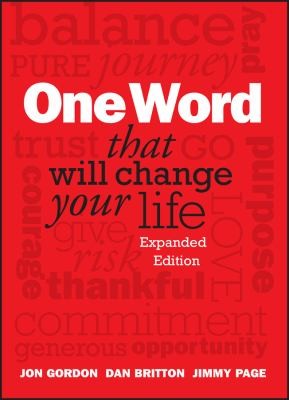
Best for choosing the direction: One Word That Will Change Your Life
A short, simple book built on one idea: instead of a list of resolutions, choose a single word to steer your year. It is the closest cousin of the question in this article — the word is the direction, compressed. Read it in an evening, then do the nine-pictures exercise with your word pinned at the top of the board.
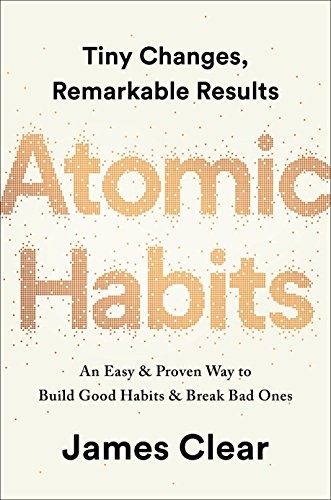
Best for the smallest actions: Atomic Habits by James Clear
The definitive book on why small actions beat big intentions: scale the habit down until it is too small to skip, attach it to something you already do, and design your surroundings so the right action is the easy one. Steps 5 and 6 of this article — the smallest action, the board where your morning happens — are this book applied to a year. Hardcover usually around $18.
From this blog's own shelf
Two of mine belong with this article. The 2027 Reset Planner is where the chosen direction lives for the year: vision-board pages, monthly calendars, habit and money trackers and a quarterly reset section built for exactly the twelve-week review above (140 pages, paperback, $19.99). And the Vision Board Clip Art Book for Women gives you 585 ready-to-cut images, words and affirmations to choose your nine from — no magazine hunting, no printer required (paperback, $21.99). Both live permanently on the Shop page.
Finding your year's direction: FAQ
What question should I ask before setting goals for the year?
Ask: what is this year actually for? Answer it before you write a single goal. Most people pick goals first and hope a direction appears; it works the other way round. One honest sentence about what the year is for — health, providing, learning, repairing — turns a list of wishes into a set of choices that agree with each other.
How many pictures should go on a vision board?
Nine is a good number for a direction board: three pictures for each of three directions, such as health, work or money, and the people around you. Nine is few enough that choosing them forces real decisions, and many enough to picture a whole life rather than a single goal.
What if I cannot find one big purpose for my life?
You do not need one. Purpose works better as a direction for a season than as a single lifelong calling. Choose what this year is for, live in that direction for twelve weeks, then review. Directions can change at the quarterly review; what matters is that the current one is chosen, visible and protected.
How often should I review my vision board?
Look at it daily — ten seconds is enough — and review it properly every twelve weeks. At the quarterly review, mark each direction moved, stalled or changed, adjust the pictures if life has changed, and keep the direction. Never wait until December to find out whether the year worked.
Can a vision board really help me say no?
Yes, because it turns no into a comparison instead of a mood. Every request gets one test: does this serve something on the board? If it does not, the answer is no — not from selfishness, but because your time already belongs to something you chose on purpose. A visible choice is much easier to protect than a private intention.
Pin this for later: save the nine-pictures method to your 2027 planning board on Pinterest, and follow @hervision2027 for a fresh board idea every week.
I still start January with a list. But now the list comes second. First comes the question — what is this year for? — and the nine pictures that answer it. Purpose, I have learned, is not something you find once and keep forever. It is something you choose, make visible, and protect a little every day. A board on a wall is a simple way to do all three — and this year, it can start with one honest hour and nine true pictures.
Get the free 2027 Vision Board Starter Pack
The 3-step system, two layouts, goal worksheet with quarterly milestones, and a 7-day starter action plan — the companion to every guide on this blog, free to download.
Download It Free →Four ways to give a year a direction, compared
The question is the same — what is this year for? — but there are four common ways to answer it. Here is how they honestly compare:
| Approach | How it works | Where it breaks | Best for |
|---|---|---|---|
| The 30-goal list | Write every goal down in January | No ranking — effort spreads thin, guilt spreads wide | A first brain-dump, nothing more |
| The nine-picture board | Three directions, nine pictures, seen daily | Needs the quarterly review to stay honest | Most people — a whole life in one view |
| A word of the year | One word steers every decision | Too abstract for some — nothing to look at | Minimalists who think in mantras |
| The quarterly plan | One focus per 12-week quarter | Can feel like project management | People who love structure and dates |